 Let's review, shall we?
 I'm in the city, I want to keep bees, and I want to annoy (and become known to) as few people as possible. Therefore, my bees are on a roof deck, and the only people who should be able to see me up there are the folks in an apartment house about a block away (who should not care) and some people with a roof deck just around the corner, whom I avoid.
So in less than a year, BOTH neighbors have their entire roof decks replaced, and it's not just the supporting joists that get exposed. My northside neighbor had told me that roofers would be coming, supposedly two weeks ago, and that she would call me the night before "so I would not be alarmed by the noise." I wondered then if she already knew, but I got information from the BeeSource folks about how to block the girls in (safely) for a day, so I figured all would be well.
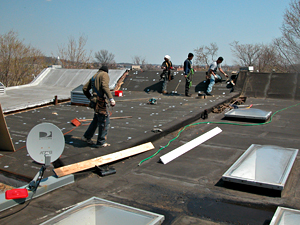
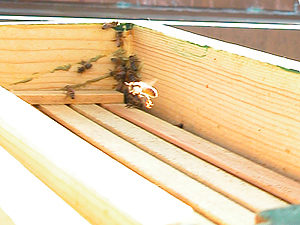
But today the roofers arrived without warning, and so they get to see my girls in action! I decided to ask them if I could take their picture, and they said yes, and that was probably a good thing. As I was standing there, bees were bumping into my head and buzzing all around me on their way in and out, and I was barefoot. If a crazy yuppie woman showed so little fear, it appeared as if the macho factor was gonna keep these guys from objecting!
It's probably a good thing that just yesterday, ahead of a short drizzly rain, I did my interim check on the girls. I have hung back for the past two weeks, in part to try to gain perspective and calm down, and in part to allow them to recuperate from my many disruptions. This is the time of year to be careful about food stores, and to apply any Spring varroa mite treatments, and to decide whether any surplus stored honey should be removed in advance of the Spring nectar flow. So I just popped the covers and pulled the bottom boards for an in-progress scan.
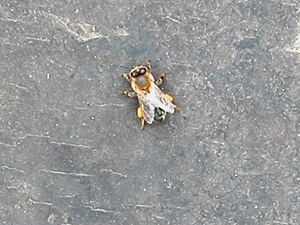 This girl was hanging out nearby as I lit my smoker, so it seemed like she wanted to pose with her sporty pollen packs. Those little yellow cuffs on her legs, near the ends of her wings, are probably maple pollen, and she seemed kind of heavily laden and taking a break. After a couple of pictures (the others were out of focus) she flew home.
The Wilde colony got the first check. When I popped the top, a wave of warmth and sweet smell reached me. The girls are definitely raising brood in there, and keeping the temps high for the bees to be.
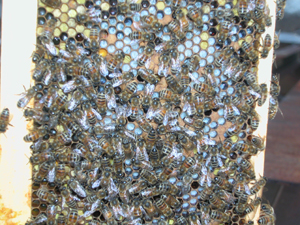
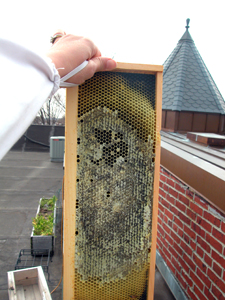 The Wilde girls still have a decent amount of food, and the frame picture at right seems to indicate that they are sort of pecking away at their honey stores, and maybe bringing in a bit of the nectar that is now available in the wild. MaryEllen says that the bees prefer fresh nectar – that the honey they store is about as appealing as canned veggies are to us, and I suppose that it could get old after 4 or 5 months of winter – and that they will ignore honey when flower juice is available. The pattern on this comb seems to show that sometimes they eat fresh, and sometimes they are still plugging away at the comb honey. There seemed to be enough honey to support this pattern for a while, and the weather is supposed to continue in a pro-bee fashion this week, so I closed up and left them alone.
The Twain hive seemed a better candidate for extracting, based on the fact that I left them over 100 pounds of honey this winter, and the first deep frame I pulled was still full of honey. Toward the center of the deep box, however, I found that the cluster had moved into the bottom part of the middle frames: they might not need all this honey, but they'd probably be wanting some. So I decided to let it ride here, too. I moved the full frame to the middle (it's safer to move honey frames around than brood comb), took off the hive top feeder for cleaning, and closed it up.
For the past two Fridays, without telling you, I have been restarting the oxalic mite treatments because there are still several workers with deformed wings appearing each day, and the temperatures have been too low to use ApiLife Var. When I pulled the bottom boards, it does seem like the mite drop is receding, but the virus itself might not need the mites anymore if enough bees are transmitting it directly. Who knows? They say that the worst sign is if drones emerge with deformed wings – they are supposed to have greater resistance – and I have not seen any of them. I can only take what care is available, and be gentle.
Finally, with the Spring have come a number of invitations to place bees in new locations, including a monastery a bit over 3 miles (a perfect distance) from my roof. MaryEllen and I are collaborating on yet another bee project at a public historical park in the suburbs, and we gave a presentation to the other volunteers there not long ago. We'll make all this the subject of another post, since this one is so long.
Finally, I am sorry for the gap in posting, for those of you who wonder about such things. There has been a death in my family, not a terribly happy family, and I sometimes wonder if my love for the bees and their tight and collaborative world has anything to do with these long-past heartaches. Nonetheless, I've been in a pointlessly thoughtful fog, and welcome the needs and rhythms of the bees to bring me back to the world of the real and the alive.


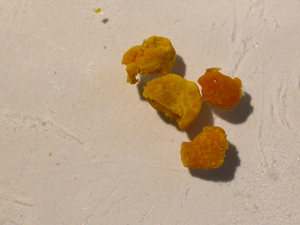 Spring has continued its early arrival in these parts with an 85 degree F day, which I celebrated by pulling the sliding panels out from the screened bottom boards of the hives. This gives the honeybees additional ventilation, and I get to look at what's been falling through lately. They also don't care at all about this operation, and are not disrupted in the least.
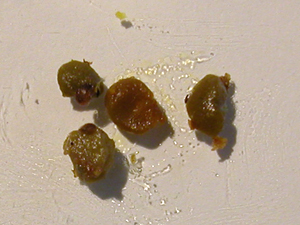 This olive drab stuff is willow pollen, apparently a far less desirable product, according to beekeepers. The bees seem to think it's OK. The Twain colony had a lot of maple on the bottom board, while Wilde had almost all of the willow. This may only mean that the Wilde girls filled up the cells with willow before working on maple, or it might mean nothing at all.
 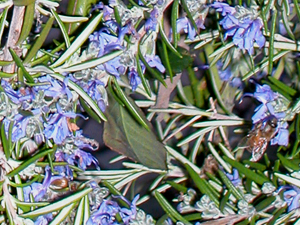 If the bees were ready to swarm, they would have done it today, so I kept an eye on them. Instead of waving goodbye to a cloud of departing residents, however, I got to supervise a glorious working day for many hundreds of busy honeybees.
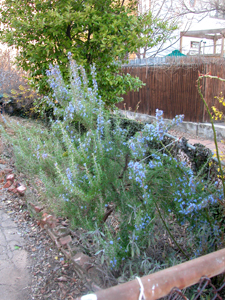 And it turns out that the bees had found this rosemary bush, gloriously in bloom, in the yard of a neighbor who does not like me much. Honeybees on the job are notoriously difficult to photograph, and I was afraid to go in this yard, so I leaned on the fence, propped up the camera, and crossed the fingers that weren't pressing the shutter. Within a set of some 20 nearly random shots, the first picture above and the last one below managed to show happy honeybees in their first Spring blooms.
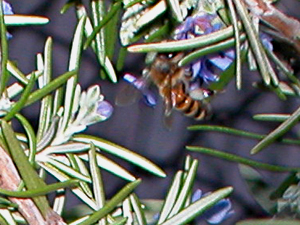 This officially marks the beginning of the season where my poor dogs will have to wait as I poke my head into every bush during their walks, looking for the girls. It's time to root for even temperatures and nighttime rains, for abundant nectar and gentle winds. It's time to realize that it's way too soon for these things, but to feel them tantalizingly just ahead.
 If you have been looking here for beekeeping advice, please let this post be your version of the surgeon general's warning. I am a moron beekeeper. At left is the only worthwhile result of this morning's endeavors: a fuzzy picture of a slightly marked queen.
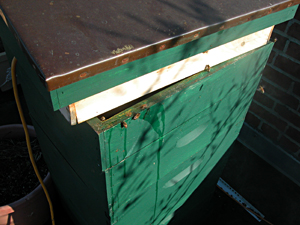 A few weeks ago it became clear that I had to watch the Wilde colony for signs of swarming: Carniolans are known for it, and my bees were crowded. Since the weather is supposed to be quite warm by the end of the week, I popped the top (the picture here today) to check, and found no signs of honeybees with plans to run away from home.
 You may wonder why this bee blog is showing you a picture of a building. Well, it's like this: We just took a midwinter break, a quick run down to Merida, Mexico – a city in the Yucatan, and I look for bees everywhere. I thought the most exciting bee-attraction in Merida would be it's large open market (the biggest on the whole peninsula), a place I'd *surely* find interesting honey and bee products. However, as we were walking along the zocalo (the central square and park for the city), I noticed bees flying behind and around giant crests on an impressive old building.
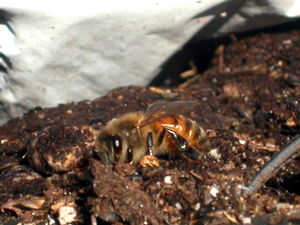 Want to know a dirty little beekeeper secret? Bees prefer mucky water. Yup, they gather nectar, pollen, tree sap, and H2O to bring back to the hive, but they take the latter from the yuckiest place they can find. MaryEllen told me that an expert once claimed that the bees were trying to gather protein with the water, but I have my doubts.
 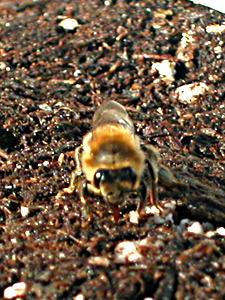 Can you see the little red tongue of the bee at right? It took 20 shots to get that for you (fuzzy as it is). Gotta get my viewfinder fixed. My bees are clearly somewhat soiled, in a couple of ways.
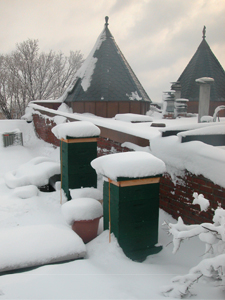 This picture captures the vision of winter beekeeping that danced in my head as the cold weather came...then went, then came again.
 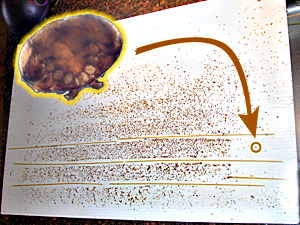 And on the fifth day (which would have been Friday), she counted. And what did she count? Nasty little pin-head sized mites, my dears. By the hundreds.
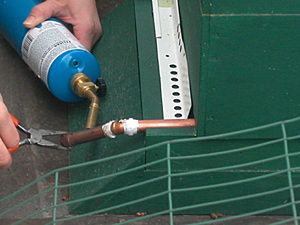 On Sunday, my husband helped me apply the second round of oxalic acid treatments to my varroa-mite infested colonies of honeybees. We were actually a couple of days overdue, because the whole idea is to time at least 3 different treatments to catch every cell in the bees' brood nest at least once while it is open. This is an actual real-life picture of me with my genuine propane torch doing the deed. You can see a movie which demonstrates the low flame and positioning in either Quicktime (
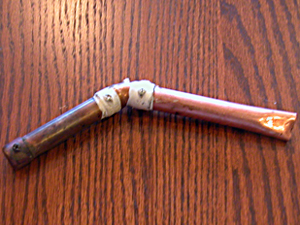 In case you are wondering what the copper thingum in my hand really looks like, this is the version I whipped up from
 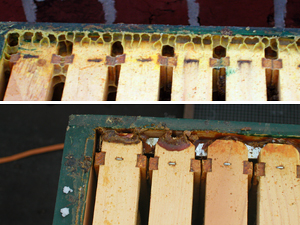 MaryEllen came over yesterday to help me find out if the Carniolan bees of my Wilde colony were on the verge of swarming (due to crowded conditions and, perhaps, overbearing mothering), and we went through all the boxes of both colonies, all the way down to the bottom board in the case of the Twain honeybees. She came bearing gifts of extra brood comb and hive covers and stands and bottom boards...she came riding to the rescue like those knights in shining armor of which little girls dream.
 Please, do not make fun of me. I know we were just at
  If the bees are good, and the mites are bad, it's safe to assume that the treatment decision I just made may be a bit ugly. But pretty is off the table.
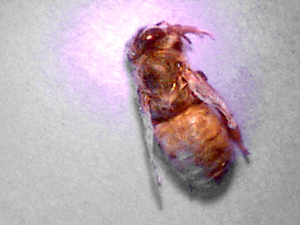 This (dead) honeybee has the classic signs of PMS, little shrivelled wing slivers that are very different from the tattered wings you might find on old bees. This honeybee never had a chance: without wings, she could never fly or forage, and she was probably cast out by her sisters as a result. Yesterday, I found a PMS bee very far from the hives, too far for her to creep. One of her sisters had picked her up, flown her off, and dropped her — hygienic behavior that is good for the hive but bad for the sentimental heart.
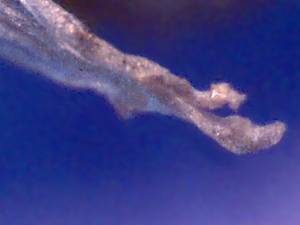 Just to belabor the point a bit, here is a picture of a wing taken at 60x magnification by my husband. Those two frozen stubs are wings that never were. The name of the order to which bees belong, Hymenoptera, refers to their two pairs of twinned, gauzy wings. This just seems like a particularly mean spirited flavor of destruction to me.
 According to the National Weather Service, the coldest days of the year here are usually from January 9 to January 23. Today, it is a sunny 60 degrees F out there, and the girls are flying their hearts out (though bees don't have hearts...but they do have blood). It's the fourth warmest January on record, with no cold snap scheduled for the immediate future.
 As you probably know by now, the bees don't fly much in the winter: they huddle together in a cluster inside the hive, and make warmth by flexing their little bee muscles. Mostly, beekeepers take one of two courses of (non)action during this season. The first is to philosophically accept that they have already done what they can for the bees, and that nature holds the rest of the cards. The second is to hover around, and wonder what superfluous actions (wrapping hives, providing extra food stores, sweeping nearby puddles off the roof...) might help the bees' chances.
 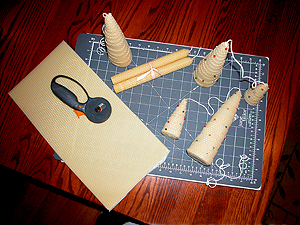 Beekeeper meetings (like bee blogs) get short on material in the winter, so our last formal agenda focused on "how to roll beeswax candles."
  For the first time this month, temperatures on the roof rose to about 50 degrees F, and the girls took flight. It was a day of much work for them, I think, as well as a bit of a release and relief.